Saparan in Candirejo: A Tradition and An Effort to Preserve the Cultural Roots
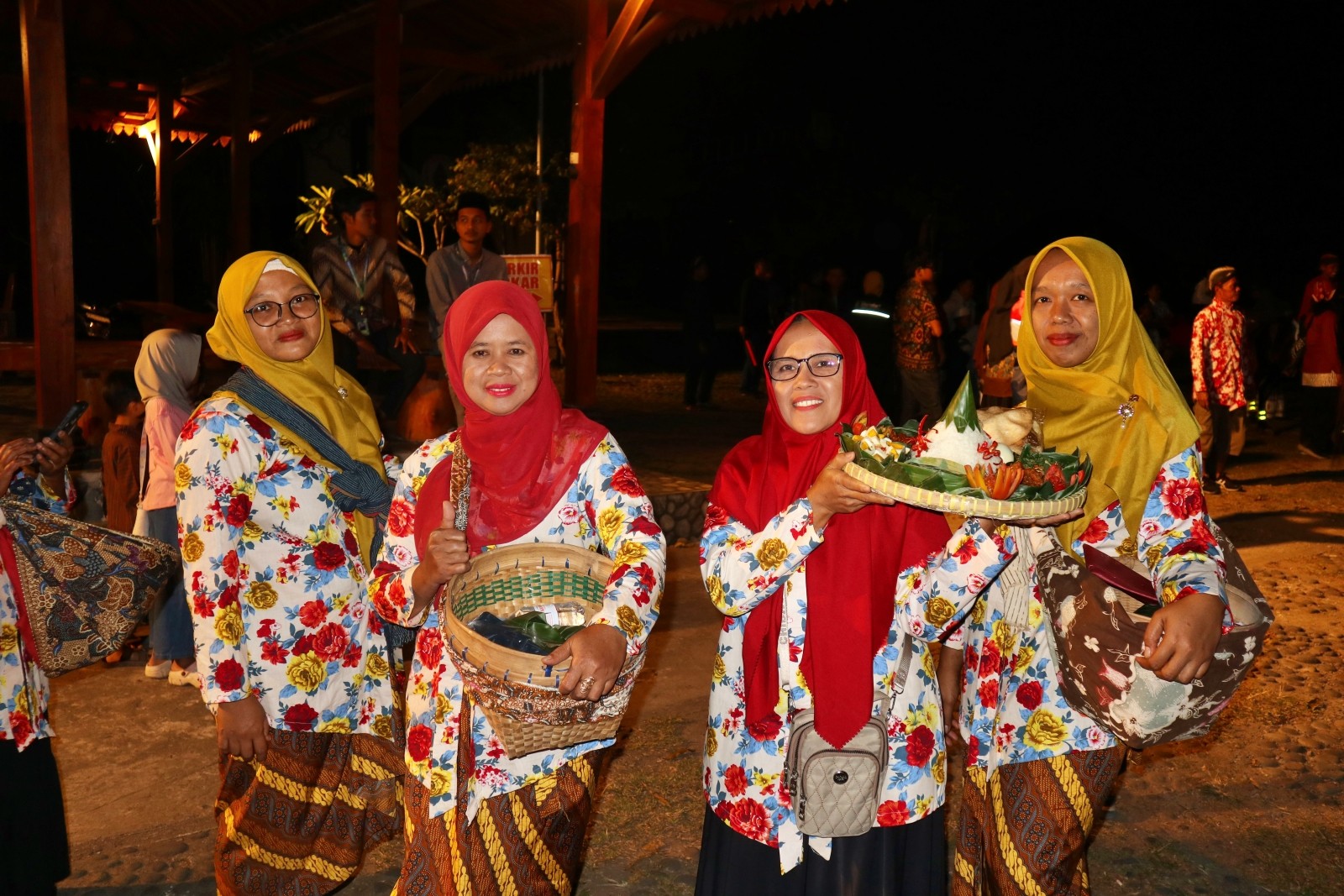
Residents of Candirejo participated in the Saparan “tumpeng” procession wearing traditional attire
Amidst the thriving ecotourism scene in rural areas, Candirejo remains committed to its local traditions. On July 23–25, 2026, the village government and the local community worked together to hold the Saparan Perti Village Festival in Candirejo . This almost annual cultural festival enlivens the month of Safar or Sapar—the second month in both the Hijri and Javanese calendars—in one of the most important tourist villages surrounding the Borobudur Temple area, Magelang Regency, Indonesia.
Saparan Candirejo is more than just a cultural festival; it also serves as a platform for maintaining harmony between humans, the natural world that sustains them, and the enduring heritage of ancestral knowledge. As a tradition passed down through generations for over three-quarters of a century, Saparan can be considered a cultural manifesto of Candirejo Village. Through Saparan, the community not only expresses gratitude for the abundant blessings and bounty of the earth, but also expresses themselves through a variety of philosophical spiritual and artistic activities.
For three consecutive days, the landscape of the Menoreh Mountains and the Progo River that flank this village seemed to bear witness to how local knowledge and Javanese culture are preserved.
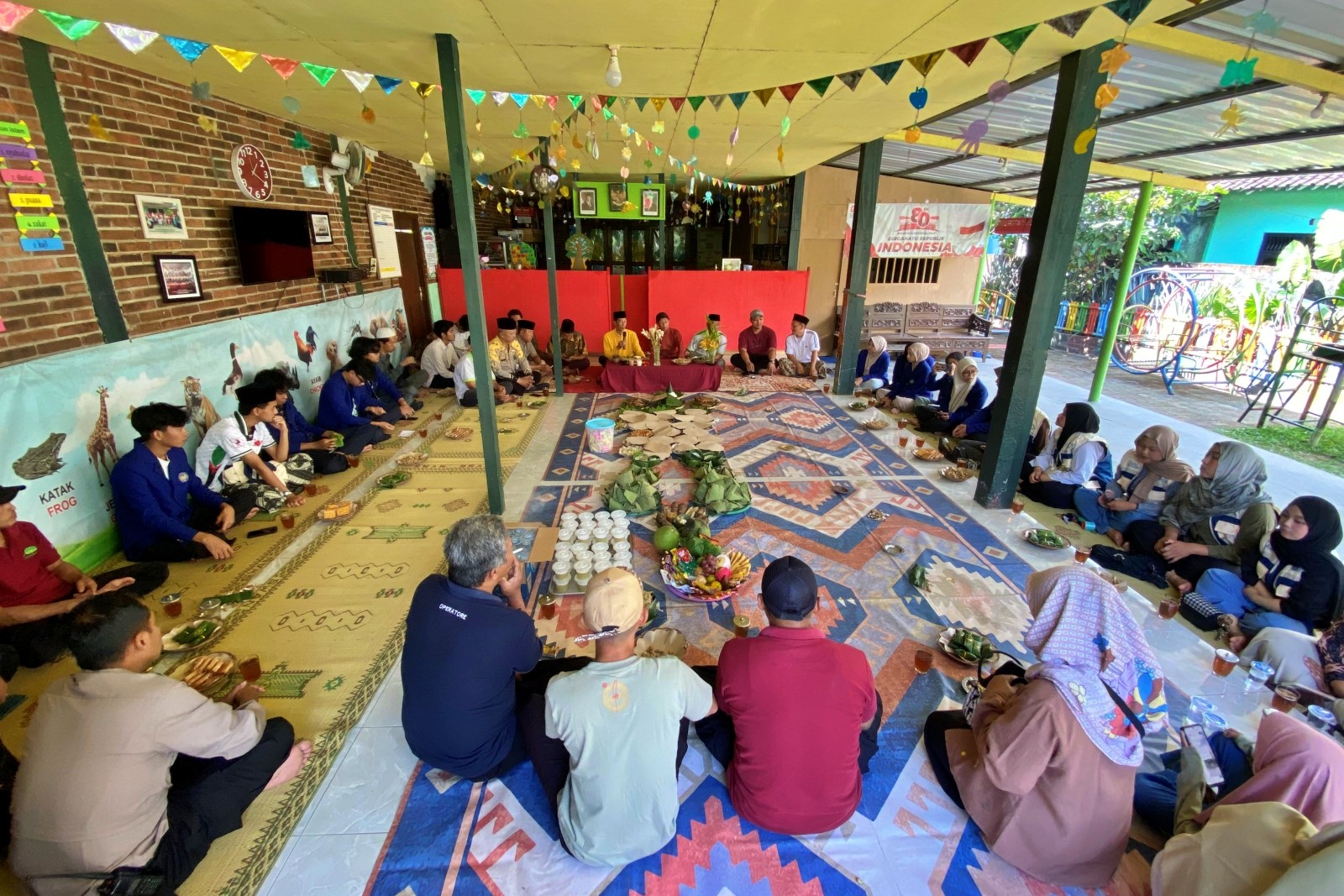
Thanksgiving ceremony before commencing the Saparan tradition.
Harmony of Tradition and Religion
Carrying the theme “Mundhi Hasil Bumi, Nguri-uri Budaya, Muja Syukur Marang Gusti,” a simple slametan genduri or thanksgiving ceremony at the home of Candirejo Village Head, Singgih Mulyanto, opened the Saparan event on Thursday Legi (July 23, 2026). That evening, KH. Fauzi Arkhan, a Salatiga native, led a large religious study group, providing spiritual guidance and spiritual depth that kicked off this annual cultural festival.
As a cultured village, the jathilan art form is certainly a highly awaited attraction. On two consecutive days, scheduled separately on Friday Pahing and Saturday Pon (July 24–25, 2026), art studios from three neighboring hamlets—Butuh, Kerekan, and Sangen—presented jathilan performances, always enthusiastically received by the community.
According to Mualif Parmo, Head of the Saparan Committee, each hamlet has its own set of stories and local wisdom. Each hamlet typically presents historical stories about Arya Penangsang, Diponegoro, and Roro Jonggrang. “So, each has its own unique characteristics [set of rules and movements],” he said. Singgih Mulyanto added that jathilan is a vehicle for education and literacy in Javanese history, steeped in noble values, and therefore must be preserved.
In between, Saparan also showcased other ancient spiritual and religious traditions, namely the Javanese solawatan (prayer offering) and kembul bujono (prayer offering). This tradition is packaged in the form of a solawatan event to express respect and love for the Prophet Muhammad (peace be upon him), which is then concluded with a shared meal from the same tray. Dozens, even hundreds of pairs of hands instantly melt away social boundaries. There are no barriers, everyone gathers and unites in the spirit of paseduluran (brotherhood), expressing a shared gratitude for the natural bounty that sustains Candirejo.
As is typical of Saparan in many regions (especially Java), an all-night shadow puppet performance was held as the final event at the end of the last day. Taking place on a modest stage in front of the village hall, the entertaining and reflective culmination featured the play “Sri Boyong” by puppeteer Ki Bayu Setiawan.
For this edition of Saparan, which was centered in the Candirejo Final Evacuation Area (TEA) Building, village residents and visitors from outside the village not only watched the art performances and religious activities as in previous years. The committee also provided facilities and social assistance in the form of basic food packages and free circumcisions to several underprivileged families. Other activities included special exercise sessions for PKK mothers and the elderly, entrepreneurship seminar, and a low-cost market to support the local economy of hundreds of MSMEs in Candirejo Village.
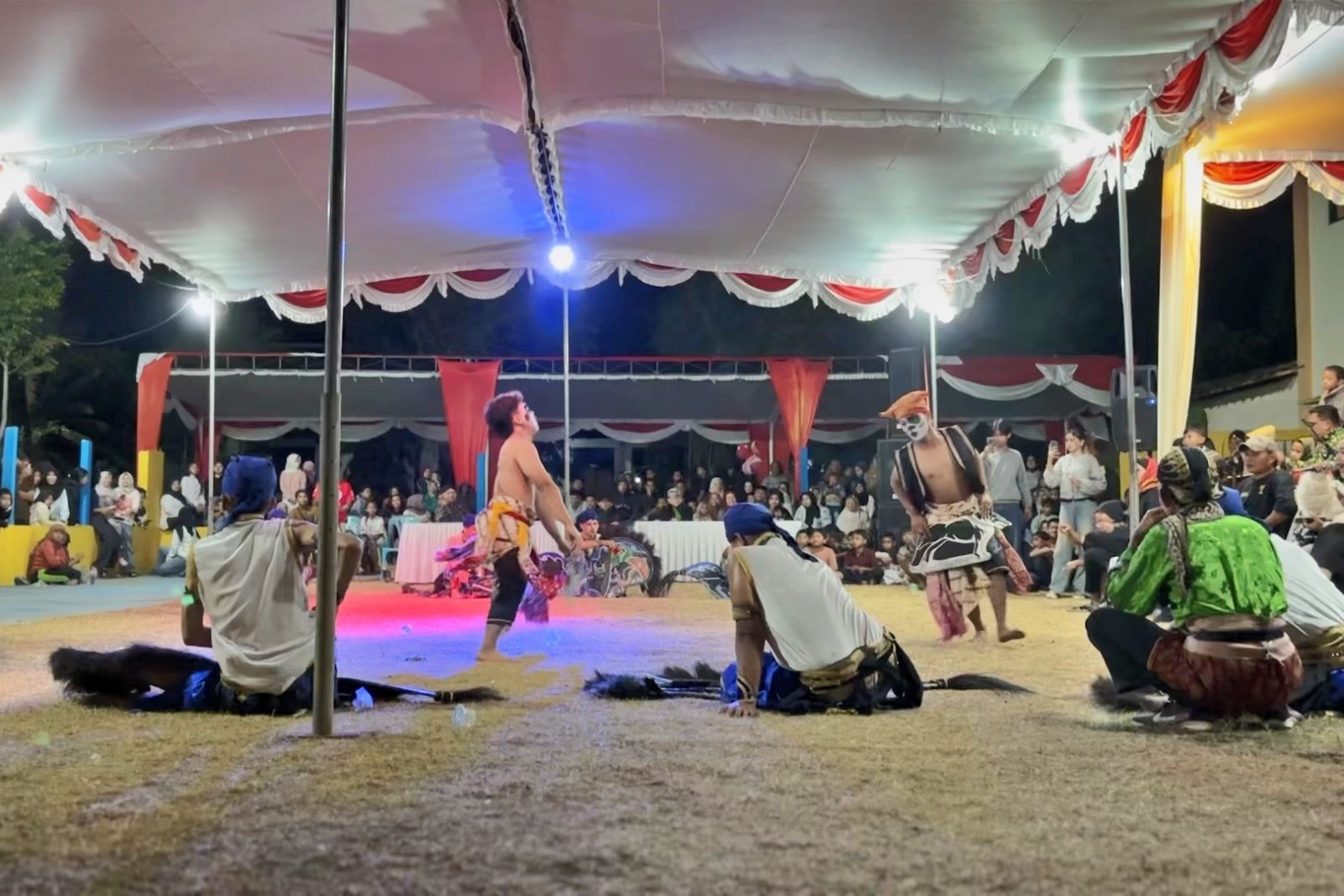
Jathilan performance
Mutual Cooperation: A Weapon to Face Funding Challenges
For cultural festivals, especially in rural areas, financial challenges present themselves. Mualif Parmo acknowledged that organizing a major event like Saparan requires a substantial budget.
This is where the village cooperative (which benefits and profits from ecotourism operations) and the mutual cooperation characteristic of rural communities—through both material and non-material support—play a significant role. Everyone works together to ensure the successful implementation of the Candirejo tradition.
“Thank God, [the funding constraints] were overcome, thanks to the excellent collaboration between the village cooperative, the village government, and the residents. Everyone supported this very beneficial [Saparan] activity,” explained Mualif Parmo.
He also added that cultural festivals like Saparan are an effort to accommodate the diverse desires of residents. “Because the activities here aren’t just cultural. For those who want to study the Koran , we provide religious studies [and solawatan ]. For those who want to see the arts, we also provide [ jathilan and wayang].” The collaboration between the older generation and a united youth group contributes to the success of the Saparan tradition in Candirejo.
Singgih Mulyanto explained that when pioneering the concept of tourist villages in the mid-1990s, the establishment of institutions through village cooperatives strengthened the potential of natural and cultural resources, as well as empowered the community. Through cooperatives, residents would have a sense of ownership, receive equal rights, and directly experience the resulting economic impact.
In the future, Singgih Mulyanto hopes that the meaning of Saparan Candirejo will extend beyond its ceremonial function and preservation of tradition. He also wants Saparan to become a platform for organizational learning and the education of young talents as the next generation.
In the future, the sustainability of ecotourism, Saparan, and other cultural activities in Candirejo will be synergistic and integrated. Not only will they be self-funded—not entirely dependent on external capital—but they will also be able to assist and benefit villagers in need. Implicitly, this is the true embodiment of the noble values of village culture.
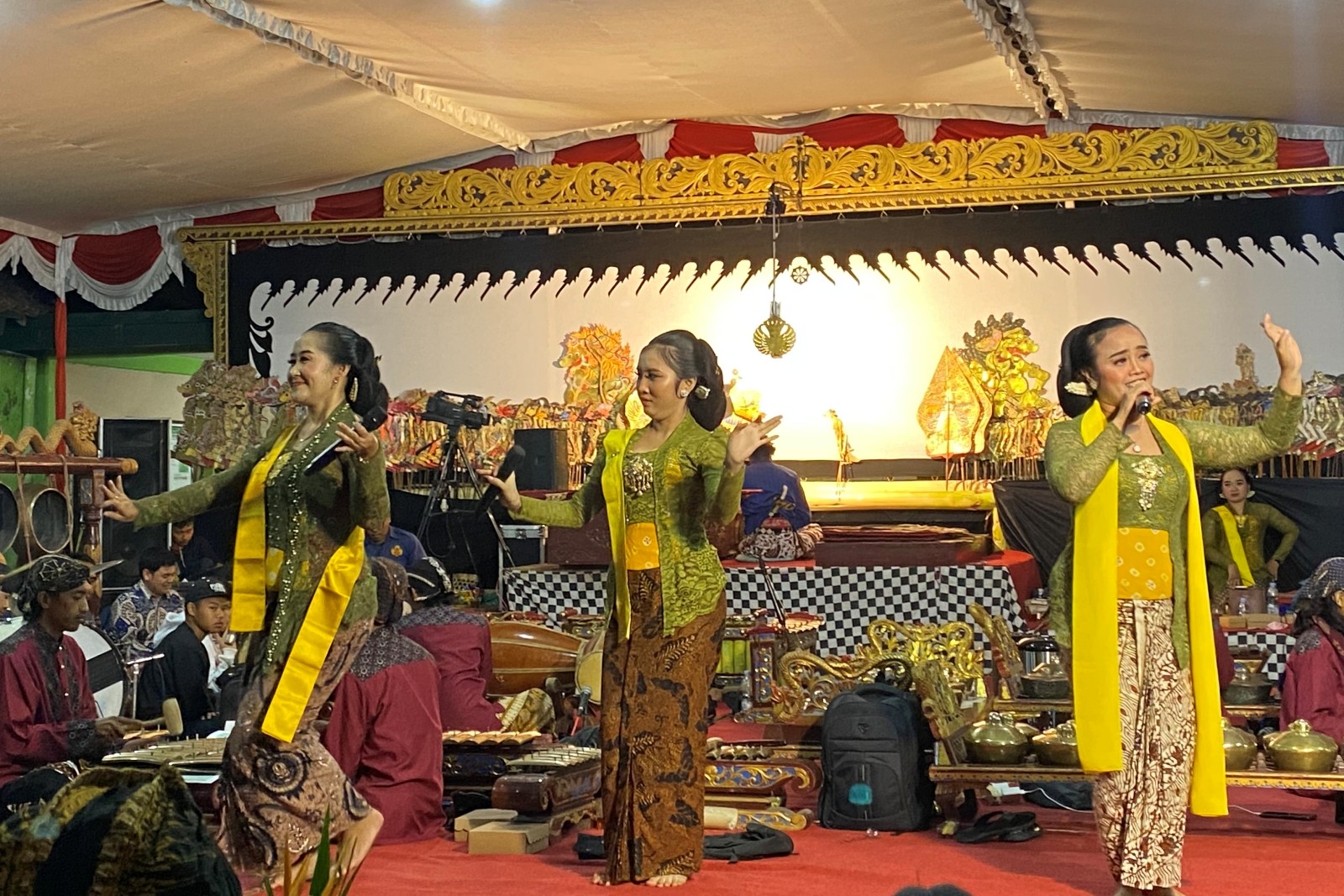
Female singers (sinden) entertained the audience during a shadow puppet performance on the final day of Saparan
Pride that Must be Maintained
As one of the pioneering tourist villages in the Borobudur area, Candirejo boasts a wealth of achievements. The fruits of decades of developing a community-based tourism ecosystem into an international-class tourist village are readily apparent. Most recently, the Candirejo Tourism Village Cooperative received the 2026 Magelang Regent’s Award for “Creative and Innovative Tourism.”
Five years earlier, in 2021, they also got the Indonesian Ministry of Tourism and Creative Economy awarded Candirejo as one of seven Inspiring Independent Tourism Villages in Indonesia through the Indonesian Tourism Village Award (ADWI). This designation signifies Candirejo’s ability to operate sustainably without relying on government funding, while also serving as a pioneer and inspiration for other villages in developing community-based tourism.
However, the abundance of achievements should not make the village government and the people of Candirejo complacent. Despite the village’s global popularity, pride in the local cultural identity, inherent throughout life, must not be forgotten. This pride is the key foundation for the implementation of Saparan and other cultural activities in Candirejo.
Singgih Mulyanto revealed that there are at least three main reasons why Saparan in Candirejo must continue to be carried out.
First, and the most essentially, preserving the traditions and culture implemented by the previous village government. Second, the Saparan tradition serves as an educational medium for the next generation. The hope is that the current generation of young people will have the will and awareness to preserve traditions.
“Thirdly, of course, there is pride in the traditions and cultural potential of [Saparan],” he stressed.
In the context of tourist villages, Singgih Mulyanto added, Saparan is more than just an interesting sight for tourists. Saparan is a form of collective cultural decision that must be respected, and a shared commitment to continuously preserving it amidst changing times.
________________
Author: Rifqy Faiza Rahman
Proofreader: Emmy Yuniarti Rusadi
Photos: Koperasi Desa Wisata Candirejo
Fully supported and published by the Koperasi Desa Wisata Candirejo to advance village digital literacy.